

Farming schemes and events on Exmoor
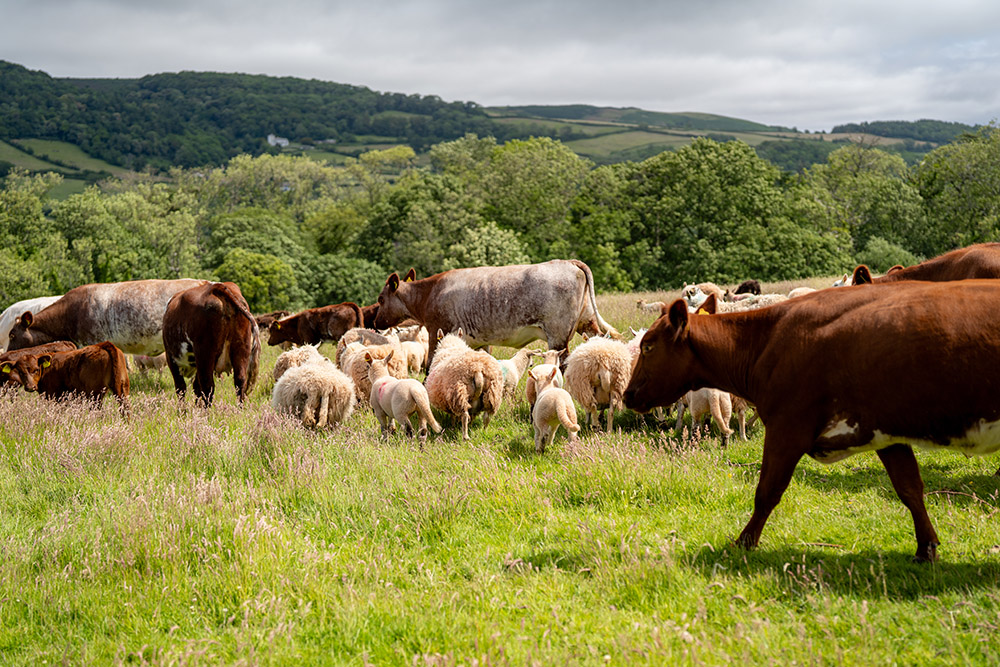 We support a number of Exmoor Hill farming Network (EHFN) events and initiatives through Farming in Protected Landscapes (FiPL) funding, such as sheep health updates, native breed ram fertility testing vouchers and equipment pools.
Ram fertility testing voucher
The project will provide 75 farming businesses with a £100 voucher towards the cost of ram fertility testing. The voucher will be available until Monday 30 November 2026, first come first served basis.
To qualify, farmers must:
- Have a farming business located within the Exmoor National Park boundary.
- Arrange fertility testing through their own veterinary practice.
- Have fertility testing carried out on at least three rams.
- Provide invoice evidence to EHFN that the testing has taken place.
- Be one of the first 50 eligible farming businesses to apply, as the scheme will operate on a first come, first served basis.
- Only one £100 voucher is available per farming business.
If you are a farmer within the Exmoor National Park boundary and would like to take advantage of the £100 ram fertility testing voucher, please contact Beth or Katherine for further information admin@ehfn.org.uk/ 01643 841455
Landowners in the Oare Valley, came together to deliver a river restoration project with Threeatop Woodland Services.
At a FiPL day at Oare House, the good work delivered to stabilise the riverbank, create a mosaic of habitats within the river and plant a broad range of trees to strengthen the biodiversity of the area - was showcased.This will support unique ecosystems and provide better connectivity for wildlife.
FiPL (Farming in Protected Landscapes) funding recently provided a Dung beetle workshop with national expert Sally-Ann Spence, hosted by Westermill Farm in Exford, for Exmoor Farmers and organisation on how these invertebrates can increase productivity The workshop highlighted: -Just how important dung beetles are in our livestock systems and what are they doing beyond removing dung, -How our native dung beetles can positively affect livestock, pastures, soil, carbon sequestration, methane emissions and farm biodiversity. -The ecosystem functions of these economically important pastoral insects, their ecology, their threats and the potential practical changes in management required for their conservation.