

Fires on Exmoor advice and prevention
Fires can spread quickly and can be devastating to the landscape and wildlife, including ground nesting birds, reptiles, amphibians and small mammals. Uncontrolled fires also put livestock, buildings and members of the public at risk.
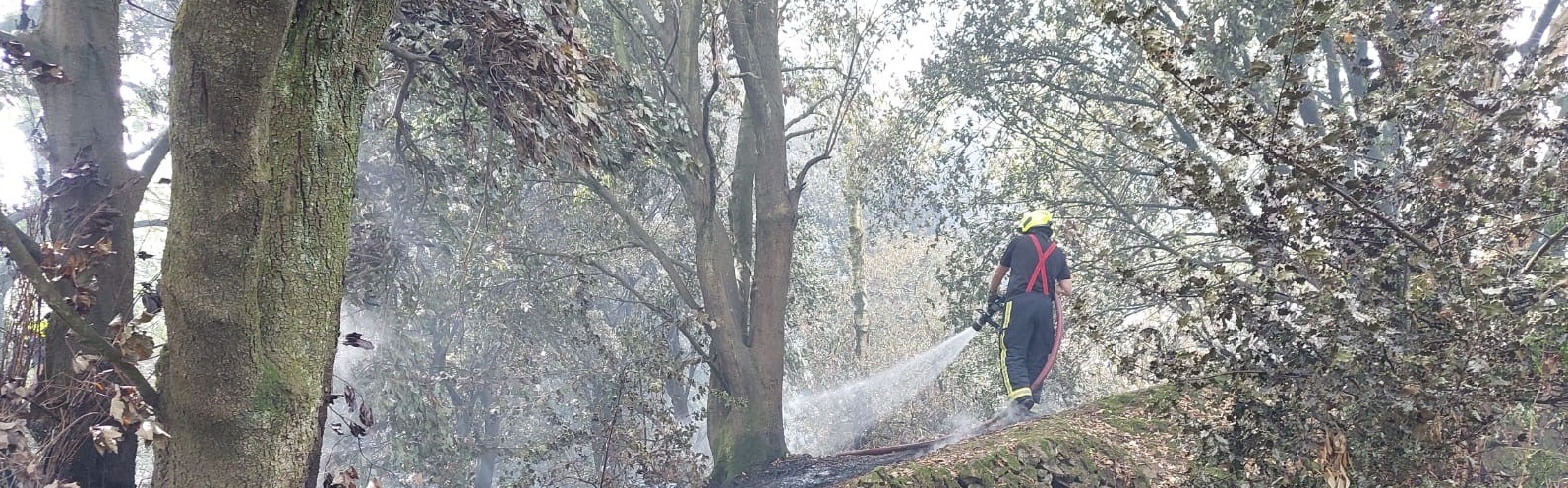
To help reduce the risk of fires:
- Do not discard litter, cigarettes, matches or lighters
- Do not have open fires or BBQs in periods of very dry weather
- Beware that glass bottles left on the ground can start fires.
- Burning property without landowner permission is arson which can result in prison sentences.
Burning property without landowner permission is arson. If you see or suspect someone of acting suspiciously, recklessly, or irresponsibly in the countryside contact the Police on 101. In the event of a fire, please report it quickly to the fire service on 999 with the location, so that they can take action.
If you see or suspect someone of acting suspiciously, recklessly, or irresponsibly in the countryside contact the Police on 101. In the event of a fire, please report it quickly to the fire service on 999 with the location, so that they can take action. The fire service recommend the use of the what3words app
Extreme Fire Risk Conditions
During periods of prolonged dry weather the risk of wildfires increase. You’ll know when we reach such conditions as there will be messaging and fire signs. In addition to the general fire safety rules above:
- If you see someone having a BBQ, camping stove or open fire call 999 and ask for the fire service. They will come and put it out
- Do not have bonfires in your garden
- BBQs at home should only be on hardstanding areas with no flammable materials below or immediately surrounding the BBQ
- Be aware of where you park your vehicle. A hot exhaust on long grass or vegetation can easily ignite
- Do not spread ash or cinders left over from hedge laying fires, even if the fire has been out for weeks. Wait for wetter weather
- Be extra vigilant on cleaning farm machinery of vegetation debris
More information from Devon and Somerset fire service here
Read the latest from National Parks UK on wildfires here
Latest blog from Defra on wildfires here
More FAQs on wildfires
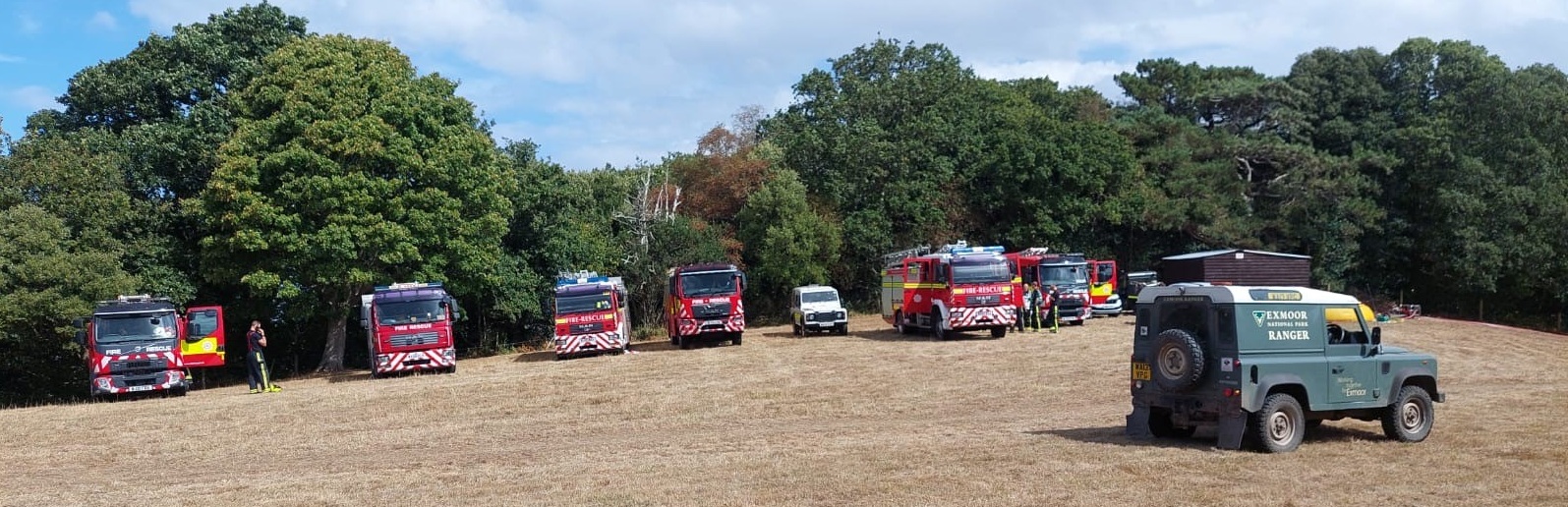
We work closely with Devon and Somerset Fire and Rescue Service (DSFRS), land managers and local partners to help reduce wildfire risk across Exmoor. Much of this work happens behind the scenes, but the FAQs below explain what is in place, what people should do if they spot a fire, and how land managers can get in touch for support.
Decisions about land management are largely the responsibility of landowners, along with Natural England as the government body responsible where the land is designated as Sites of Special Scientific Interest (SSSI). So, while we can encourage and try to influence things, we have very little control of land management on any land that we do not own.
Individual landowners will be responsible for measures such as fire breaks on their own land and it is down to individual owners/graziers of moorland sites to carry out a wildfire risk assessment if they are in Countryside Stewardship, if there are specific moorland options selected.
Exmoor National Park Authority owns around 7% of the National Park area and on this land we have a greater degree of control as to how it is managed. This includes woodlands which we directly manage, and moorland / heathland and some farmland which is mostly managed by tenants. It is worth also highlighting that the vast majority of ENPA’s land is designated as SSSI and we work closely with Natural England on management prescriptions for the SSSIs.
Devon and Somerset Fire and Rescue are the main lead for wildfire risk management on Exmoor, fighting fires and in related communications, but we work closely with them to support teams in any way we can in terms of wildfire planning, advice, training, equipment, information and practical assistance. If you have an issue or query you can raise this with the fire service and in an emergency, it’s vital to dial 999.
Yes. Extreme fire warning signs are used at high-risk times and have been placed at major entry points to moorland sites across Exmoor to help raise awareness and encourage people to take extra care.
Call 999 immediately and ask for the fire service. Give the most accurate location you can, including nearby roads, landmarks, grid references or What3Words if available. Do not attempt to tackle the fire yourself, and move to a safe location away from smoke, flames and steep or difficult terrain.
Advice from the fire service is clear that fire beaters should not be put out for public use. They are only useful on very small fires, must be used with care, and can put people at risk or even make a fire worse if used incorrectly. The safest and most useful action is to report the fire quickly and accurately.
We are contacting land managers of sites most vulnerable to wildfire to explain what is already being done and to ask whether further support would be helpful. This could include simple equipment, signage, training or other practical measures.
If you are a land manager, partner organisation or local resident with information that could help reduce wildfire risk, please contact info@exmoor-nationalpark.gov.uk
The heightened risks of both wildfire and flooding that result from our changing climate are strongly considered in projects such as the Reviving Exmoor’s Heartlands Landscape Recovery Scheme led by Exmoor National Park Authority working with 22 participants, which is being developed to cover 7,000 hectares of moorland on Exmoor. The principle aim that helps mitigate both wildfire and flooding is ensuring rainwater is held in the landscape for longer, such as through restoration of the extensive peatlands where rewetted peat is a proven barrier to wildfire. Strategic areas of woodland creation also perform a similar function holding water in the landscape through a variety of means and creating a wetter, shaded and more humid environment that is resistant to fire. Scattered trees also benefit stock by providing shading during hot weather helping them to better graze the vegetation that might otherwise present a fuel risk. Cyclical winter burning is still carried out on areas of dry heath which rejuvenates the habitat and reduces the fuel load in these drier areas. Much of this will be achieved initially through capital investment and maintained in the long term through appropriate grazing by local farmers who are participating in the scheme, combined with maintaining strategic firebreaks.
Swaling
Swaling or controlled burning is a traditional, legal activity carried out to rejuvenate heather moorland and provide better grazing for livestock. It is normally carried out in the winter months, between 1st October and 15th April.
To prevent damage to nesting birds Exmoor National Park Authority recommends that swaling is not carried out after the end of March. However, Exmoor National Park Authority does NOT licence or control burning on privately owned land, or any Countryside Stewardship Schemes involving moorland management.. The regulation of burning is carried out by Natural England which ensures that swaling is done in accordance with the Heather & Grass Burning Regulations 2021 and the specific needs of the site.
You must contact Natural England if burning on a Site of Special Scientific Interest.