

Sowing the Seeds
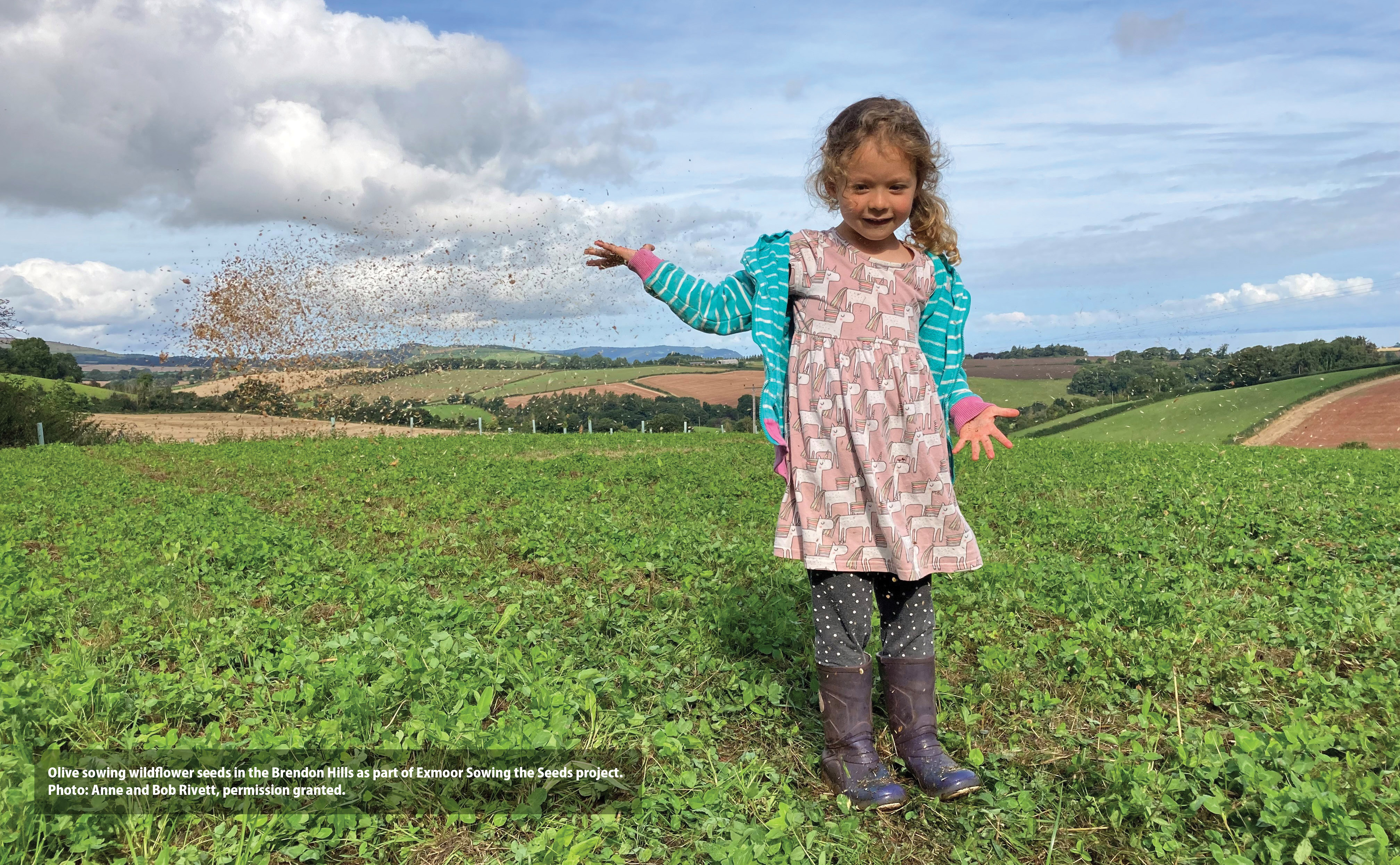
Your donations will help us to restore, create and link species-rich grassland on Exmoor.
The project launched in 2021 and so far, has:
- Supported 90 landowners, farmers, and community groups
- Engaged schools, volunteers, and community groups in meadow conservation activities
- Restored or created over 480 hectares of meadow habitat
- Harvested and distributed more than 591 kg of wildflower seed
- Delivered 100 botanical surveys, 35 bespoke management plans, and 15 soil surveys
Meadows attract a multitude of wildlife and often support flora and fauna that don’t always thrive in other habitats. Typically characterised by species such as common knapweed, ox-eye daisy, yellow rattle, hawkbits, vetches and rarer orchids, they can also support colourful waxcap fungi with names such as parrot, snowy and crimson. In addition to being aesthetically beautiful, they are ecologically important as they provide areas for pollinating insects, nesting, food gathering, shelter and even animal courtship displays. Flower-rich meadows can also be historically important, part of our local rich heritage, and their enjoyment can contribute to our own wellbeing.
Like other ecosystems, meadows experience increased pressure due to climate change, especially as precipitation and weather conditions change. However, wildflower rich meadows can help slow climate change as they are powerful carbon sinks; diverse, deep-rooted plants store a substantial amount of carbon in soils and help to build healthy, resilient soils.
The loss of wildflower meadows, botanically richer than many other habitats, has been staggering; 97% have been lost since the 1930s. 75% of the surviving meadows occur in small fragments and remain vulnerable to destruction. Over the last 80 years, we have seen the drastic decline of flower-rich meadows and species rich grassland on Exmoor, down to only 2500ha. This has also affected populations of important species, such as pollinators and ground nesting birds, dependent on them.
We want to turn the tide on this decline and restore grasslands back to species rich condition.
The Exmoor Sowing the Seeds Project is a major collaboration between Exmoor National Park Authority, Devon Wildlife Trust, Farming and Wildlife Advisory Group South West (FWAG SW), South West Water, Natural England, and others. CareMoor donations continue to support this project.
Since 2021, the Project has been harvesting wildflower seed from species rich meadows across Exmoor, matching them with nearby receptor meadows in need of restoration, with seed helping to boost populations of important wildflowers. Alongside seed, we provide bespoke support to each landowner or community group, including visits, management plans, botanical and soil surveys. We provide continued guidance for restoration, as the process can take time. So far, we have helped support a huge number of landowners, community groups and schools right across Exmoor. Meadows in restoration now stretch across the park and even small meadow areas provide those important stepping stones and lifelines for wildlife to be able to feed and move across the landscape more easily.
Donations to CareMoor supported our purchase of a brush harvester, straw chopper and seed spreader, all essential for the restoration work. We often collaborate with FWAG SW, The National Trust and Devon Wildlife Trust to refine our techniques in meadow restoration and to skills share.
We set up a wildflower nursery to grow more meadow plants and become a community growing hub, and we hand harvest certain species such as knapweed and devil’s bit scabious seeds to grow as plug plants for meadow planting.
Every year we work with landowners, school groups, and organisations across Exmoor on meadow restoration, running events that engage people to connect with meadow landscapes, and hold workshops which help meadow owners to learn the skills to manage meadow habitats. We run sessions with school groups at our Pinkery Centre for Outdoor Learning and work with pupils from local schools to create new meadow areas.
Our beautiful and useful Exmoor ponies have been helping us and other organisations with meadow management, supporting more bio-diverse habitats with their perfectly adapted conservation grazing.
Please contact us at lcornwall@exmoor-nationalpark.gov.uk
Send a gift card
You can send a specially designed Greetings Card and Certificate of Donation to the Sowing the Seeds Appeal, by visiting one of our National Park Centres or using our online shop. See the links below for details and images of the cards.
If you’d like to discuss your donation with us, please email caremoor@exmoor-nationalpark.gov.uk
Would you like to help, learn more or become a donor site?
We would love to hear from anyone interested in meadow creation, at any scale, and also from people with existing flower-rich meadows who might be interested in becoming a donor site. Please contact us at lcornwall@exmoor-nationalpark.gov.uk
Exmoor Sowing the Seeds Project
Skip to descriptionMeadow Restoration Project in Exmoor National Park